
Sea of Stars in the Maldives: What the Glowing Beach Is and Why It Is Unpredictable
The sea of stars is bioluminescent plankton lighting up disturbed water at night. This guide explains the science from NOAA and Scripps, and is honest that no official Maldivian source confirms a reliable location or season.
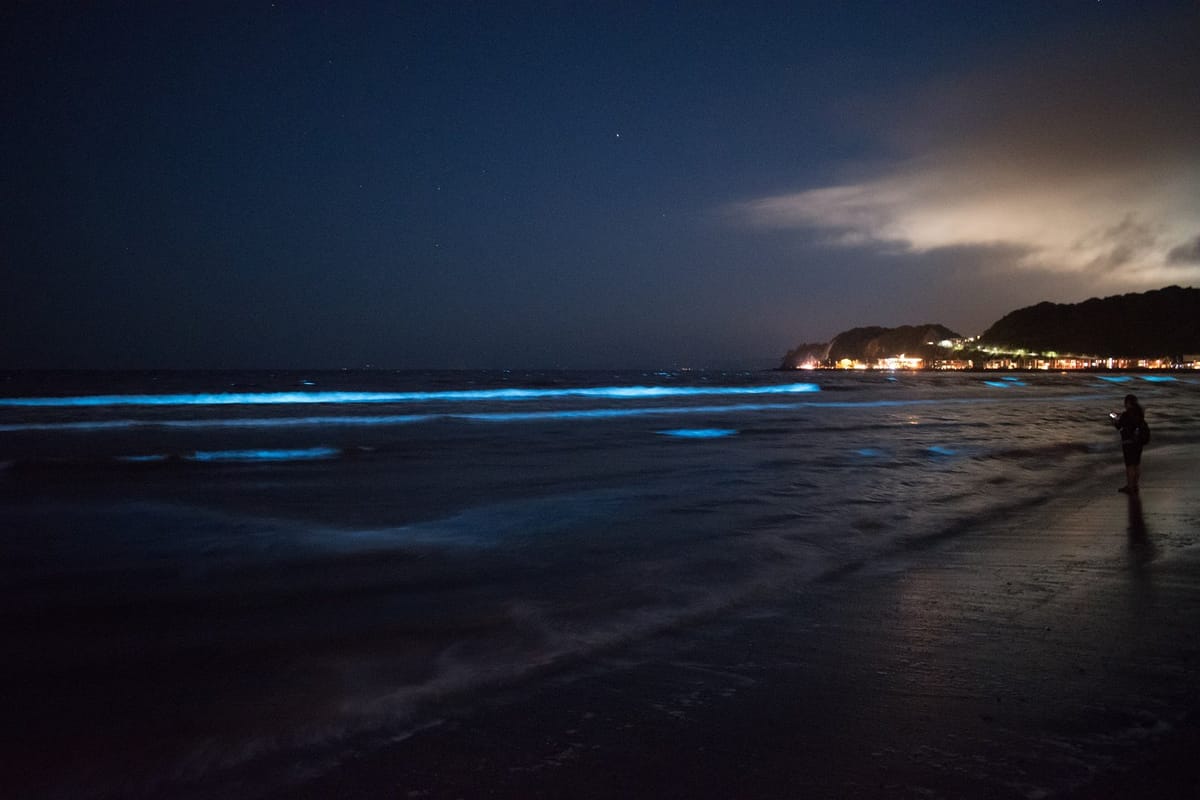
The "sea of stars" in the Maldives is bioluminescence: tiny marine organisms that give off blue-green light when the water around them is disturbed, so waves and footsteps in the shallows can glow at night. It is a natural event that cannot be scheduled, and no official source we checked can say where or when it will appear. Information is as of November 2026. People search for "sea of stars Maldives", "glowing beach in the Maldives", "bioluminescence in Maldives" and "Vaadhoo". For wider planning, see our things to do in the Maldives and the Maldives travel guide.
What is the sea of stars?
The US National Oceanic and Atmospheric Administration (NOAA) defines bioluminescence as "the production and emission of light by a living organism". It says bioluminescent creatures live throughout the ocean, from the surface to the seafloor, and that most types of animals, from bacteria to sharks, include some bioluminescent members. Typically the light is used to warn off or evade predators, to lure or detect prey, or to communicate within a species.
Glowing waves at the shore usually come from single-celled algae called dinoflagellates. Scripps Institution of Oceanography at the University of California San Diego explains that in some algal blooms, sometimes called red tides, the force of breaking waves creates "dazzling nighttime light shows of blue-green bioluminescence". Scripps adds that dinoflagellates use the flash as a defence, to ward off predators and to alert the predators of their predators. The response is very fast, about 15 milliseconds after stimulation.
Why waves and movement make the water glow
Scripps research found that the cells flash only when a minimum force is applied quickly. In laboratory tests the trigger was about seven micronewtons, comparable to an ant resting on the skin, and the same force applied slowly produced no light. That is why a wave breaking, a hand trailing through the water or a footstep can light up the water in a way that still water does not.
A UC San Diego magazine article adds that dinoflagellates store the light-producing chemicals, luciferin and luciferase, in small compartments inside the cell, so the reaction can fire immediately when the cell is stimulated.
Where is the sea of stars in the Maldives?
We could not confirm a specific location from an official source. Visit Maldives, the national tourism body, has pages on places, experiences and whale sharks, but none we found describes a glowing beach, and we found no Maldivian government source naming one. People searching for the glowing beach often add the island name Vaadhoo. We treat any link between that island and the glow as unconfirmed, because we could not check it against an official source.
Our advice is to treat any named beach as a possibility, not a promise. Ask your own island's guesthouse or resort whether glow has been seen recently.
Best time to see the sea of stars
There is no verified season. Scripps says that "many mysteries remain" about how the blooms behind such light shows emerge, and no Maldivian agency we checked publishes a forecast. Online guides disagree on the months, and we have not repeated those claims. What the science does say is that the light is only visible after dark and only when the algae are present and the water is disturbed.
So plan the trip around other things, such as weather, season and a place to stay, and treat the glow as a bonus. Our weather guide covers the seasons.
Tips for a night walk
- Go after dark, away from bright lights, and give your eyes time to adjust.
- Expect faint blue sparks at times, not a constant glow. The brightness varies.
- Do not use flash. Photographs need a long exposure and a tripod.
- Take care at night near water, and follow the advice of local staff. We found no official Maldivian guidance on swimming in glowing water, so we make no claim about it.
- Respect local island customs on dress and behaviour. See our local islands guide.
About the photo
The photo shows Noctiluca scintillans, a bioluminescent dinoflagellate, at a beach in Japan. It is used for illustration only. We could not find a freely licensed photo of the Maldives glow.
Frequently asked questions
What causes the sea of stars in the Maldives?
Bioluminescent plankton, most often dinoflagellates, which flash blue-green light when disturbed, according to Scripps Institution of Oceanography and NOAA.
Where is the glowing beach in the Maldives?
Searches often name Vaadhoo. We could not confirm any location from an official source, and glow is not guaranteed anywhere.
When is the best time to see bioluminescence in the Maldives?
No official season exists. The glow depends on algae being present, darkness and water movement. We found no reliable forecast.
Is the sea of stars there every night?
No source we checked says it is. Treat it as an occasional event.
Is bioluminescence the same as a red tide?
Not always. Scripps says some red tide blooms produce bioluminescence, but glowing water does not by itself tell you what is in it.
Does the sea of stars happen elsewhere?
Yes. NOAA says bioluminescence occurs throughout the world's oceans, and our photo was taken in Japan.