
Maldives Manta Rays: Best Time, Sites by Monsoon and the Code of Conduct
The Maldives has the largest known reef manta ray population in the world, and the animals live here all year. This guide lists sites by monsoon, explains the two species and sets out the code of conduct for swimmers.
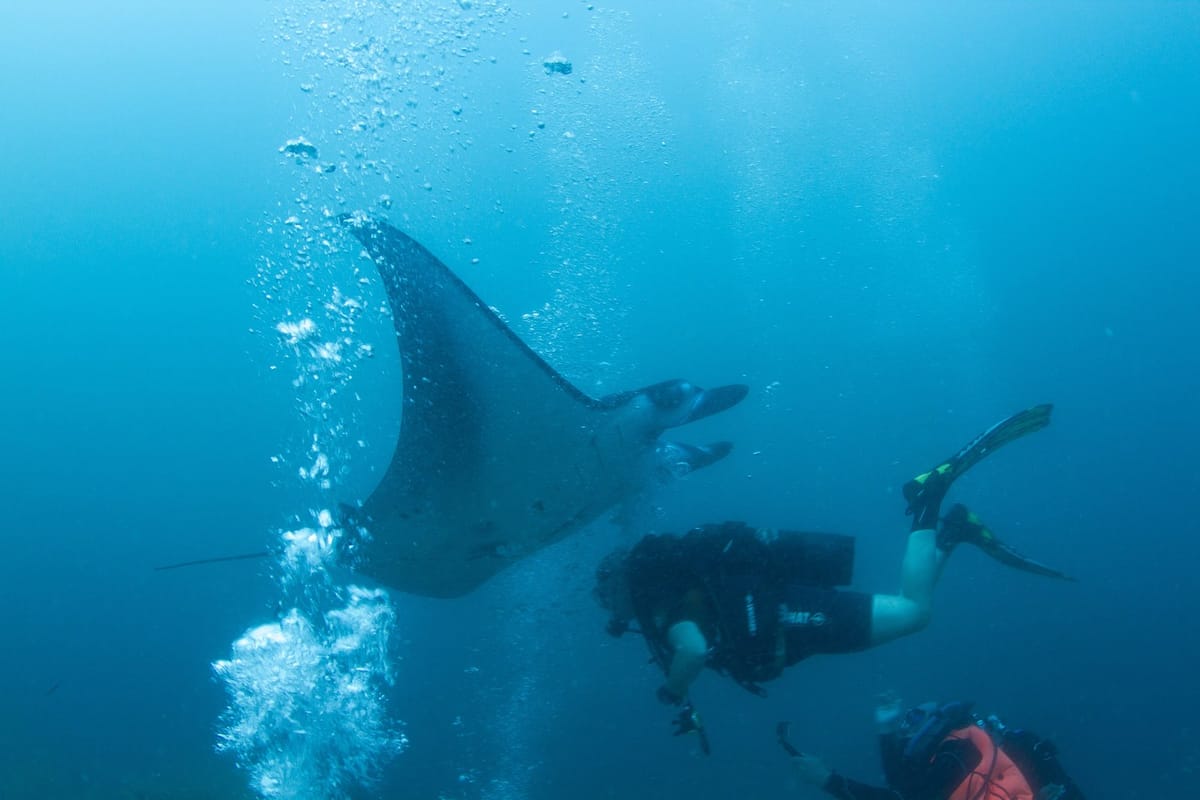
The Maldives has the largest known population of reef manta rays in the world, according to the Maldives Manta Conservation Programme, and they live here all year. Which site is best depends on the monsoon, because the rays follow the plankton as the currents change. This guide explains the sites by season, the two species you may meet and the code of conduct for swimmers. Information is as of November 2026. People also search "Maldives manta ray season" and "Malediven Manta". See also our guides to Hanifaru Bay, whale sharks and diving and snorkelling.
Maldives manta rays: the facts
The Maldives Manta Conservation Programme (MMCP) is a Maldivian NGO affiliated with the UK charity Manta Trust. It says the Maldives has a large resident population of reef manta rays (Mobula alfredi) and an annual migratory population of oceanic manta rays (Mobula birostris). After 18 years of data collection, as stated on its website, it estimates about 4,000 reef mantas in the country, with 6,000 individuals identified on record, which it describes as the largest known population in the world "by a large margin". Its oceanic manta database holds more than 1,000 individuals, but they are highly transient and rarely re-sighted.
According to the Manta Trust, the two species differ in size and habit. Reef mantas can reach about four metres in wingspan, live in shallow coastal areas and have a Y-shaped shoulder pattern. Oceanic mantas can reach seven metres, live in deeper open water and have a T-shaped pattern. Mantas are filter feeders, they must keep swimming to breathe, and the Manta Trust says females give birth to a single pup every two to five years.
Best time to see manta rays in the Maldives
MMCP says reef mantas are year-round residents that migrate across the 26 atolls in step with the changing monsoons and the resulting shifts in zooplankton. That means the answer to "best time" is about the place, not the month. The MMCP's list of protected aggregation sites gives these seasons:
- Southwest Monsoon (about May to November or December): feeding gatherings at Hanifaru Bay in Baa Atoll (May to December); a cleaning station at Dhigu Thila in Angafaru, Baa Atoll; juveniles in the sheltered lagoon at Guraidhoo, South Malé Atoll (May to November); and a cleaning station at Fushi Kandu in Laamu Atoll.
- Northeast Monsoon (about December to April): adult mantas at the Rasfari cleaning station in North Malé Atoll (December to April); adults at the Rangali Madivaru cleaning station in the Rangali channel, Ari Atoll (December to April); and juveniles feeding at Vavvaru in Lhaviyani Atoll.
- Year-round: Mudakan Manta Point in the Maa Kandu channel in Addu Atoll, used by adults and juveniles.
Visit Maldives also names the Manta Point in the southeast of North Malé Atoll, where mantas gather to feed during the Southwest Monsoon from May to October, and says diving with mantas is possible throughout the year in Addu Atoll. For the weather behind the monsoons, see our weather guide.
Where to see manta rays in the Maldives
Hanifaru Bay, Baa Atoll. The best-known feeding site, where the MMCP has recorded up to 247 mantas in one feeding event. It is protected, entry is controlled and diving is banned, so it is snorkel-only. Read our Hanifaru Bay guide.
Cleaning stations. A cleaning station is a spot on a reef where cleaner fish remove parasites from large animals. The MMCP lists several, including Fushifaru Thila in Lhaviyani Atoll, Banana Reef in South Malé Atoll and Mudakan Manta Point in Addu Atoll, where it says the mantas often hover over divers' bubbles. These sites are usually visited on dive or snorkel trips from resorts, guesthouses and liveaboards. See our liveaboard guide.
Fuvahmulah, for oceanic mantas. The MMCP says the oceanic manta is regionally common for just a few months of the year in Fuvahmulah, one of the southernmost atolls, and that adult oceanic mantas pass through the Farikede reef there for a few weeks each year during the Northeast Monsoon, with sightings peaking in March and April.
Are manta rays protected in the Maldives?
Yes. The MMCP says all ray species are protected by law in the Maldives, and it is illegal to capture, keep or harm any ray. The export of ray products was banned in 1995, and all rays, including manta and devil rays, were added to the Maldivian National Protected Species List in 2014. The MMCP also says it worked with the government and the Environmental Protection Agency to designate protected areas for manta sites, including Hanifaru and Angafaru in Baa Atoll, Vavvaru and Fushifaru in Lhaviyani Atoll, Rasfari in North Malé Atoll and Guraidhoo in South Malé Atoll.
Manta ray code of conduct
Local rules differ by site, so follow your guide. A best-practice guide produced by the Manta Trust, WWF and Project AWARE sets out an example code for manta tourism, based on the Manta Trust's interaction guidelines:
- do not touch, ride, feed or chase mantas, and do not block their path;
- keep at least 3 metres from the animal;
- approach slowly from the side, so the animal can see you and keep a clear path ahead;
- do not swim over a cleaning station, and stay still and at a distance if one is in use;
- groups of no more than 10 people including the guide, for no more than 90 minutes;
- no sharp equipment such as jewellery, and avoid sun lotion, which the guide says may irritate the animals and damage habitats;
- boats keep at least 10 metres away and do not drive over cleaning stations or aggregation sites.
The MMCP also publishes entanglement protocols and says threats in the Maldives include fishing gear entanglement, unsustainable tourism and habitat degradation. It estimates manta tourism brings in about US$8.1 million a year in direct revenue.
Frequently asked questions
What is the best time to see manta rays in the Maldives?
It depends on the site. Reef mantas live here all year and move with the monsoons. Hanifaru Bay is best from May to December, while Rasfari and Rangali Madivaru are used from December to April.
Where is the best place to see manta rays in the Maldives?
Hanifaru Bay in Baa Atoll is the best-known for mass feeding. Cleaning stations such as Mudakan Manta Point in Addu Atoll and sites in Ari and North Malé atolls are visited in other months.
Can you swim with manta rays in the Maldives?
Yes, on guided snorkel or dive trips, following the code of conduct: no touching, at least 3 metres distance and a slow approach from the side.
What is the difference between reef and oceanic manta rays?
The Manta Trust says reef mantas reach about four metres and live in shallow coastal areas, while oceanic mantas reach seven metres and live in deeper open water. Reef mantas are resident in the Maldives all year.
Are there manta rays in the Maldives all year?
Yes. The MMCP says reef mantas are year-round residents. Oceanic mantas are seasonal and regionally common for only a few months in Fuvahmulah.
Is manta ray snorkelling at Hanifaru Bay allowed?
Yes, snorkelling only, under the protected-area rules and with a guide. Diving is banned there.