
Hanifaru Bay, Maldives: Manta Season, Rules, Fee and How to Get There
Hanifaru Bay is a protected bay in Baa Atoll where reef manta rays gather to feed, mostly from May to December. This guide covers the UNESCO Biosphere Reserve, snorkel-only rules, the listed entry fee and booking.
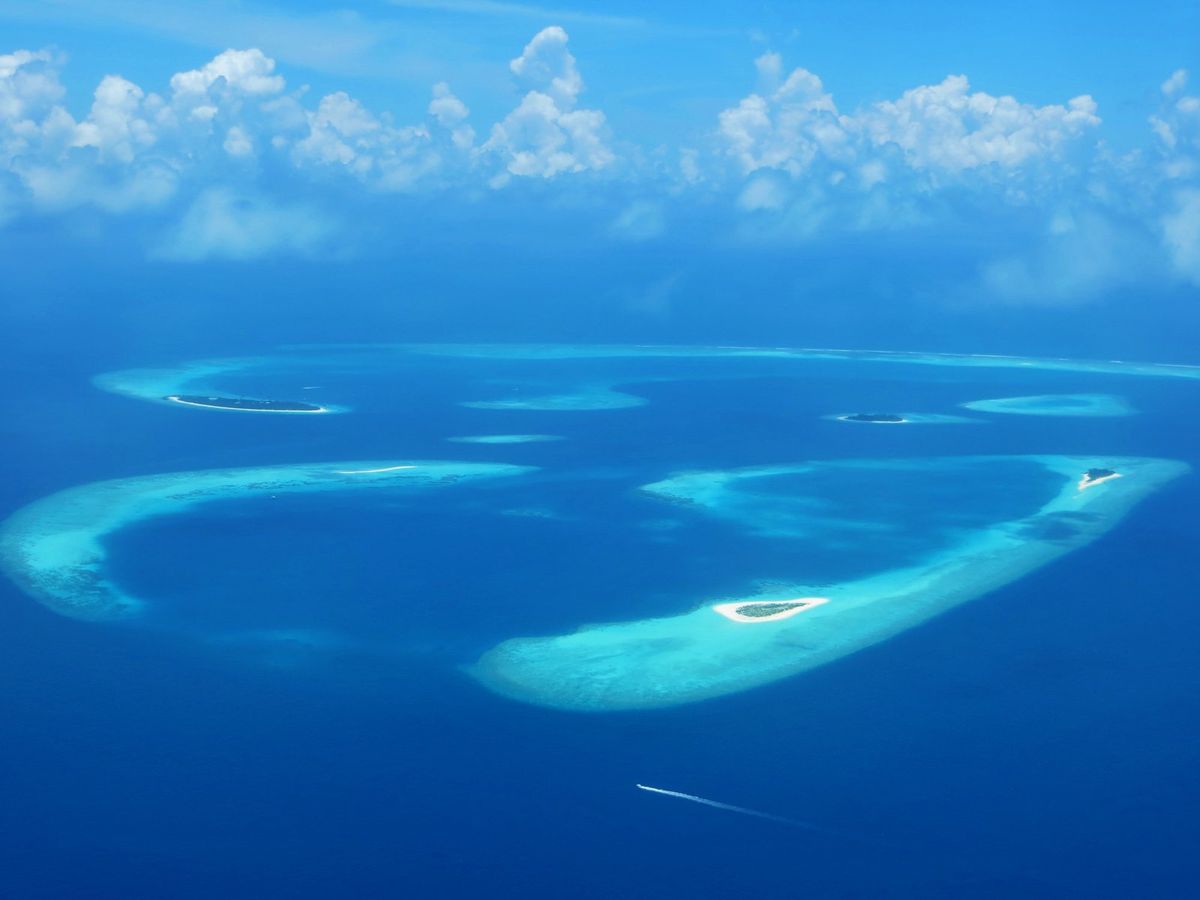
Hanifaru Bay is a small bay on the eastern edge of Baa Atoll in the Maldives, inside a marine protected area and the Baa Atoll UNESCO Biosphere Reserve. It is known for seasonal feeding gatherings of reef manta rays, sometimes joined by whale sharks. Visitors may snorkel there but may not scuba dive, and entry is controlled. Information is as of November 2026. People also search for "Hanifaru Bay Maldives", "Hanifaru Bay Baa Atoll" and "Hanifaru Bay manta season". For the wider picture, see our guides to manta rays and whale sharks in the Maldives.
What is Hanifaru Bay?
The Maldives Manta Conservation Programme, a Maldivian NGO affiliated with the UK charity Manta Trust, describes Hanifaru as a marine protected area (MPA) on the eastern edge of Baa Atoll, in the central atolls. It notes that "Hanifaru" in Dhivehi translates as narrow ("hani") reef ("faru"). A 2016 factsheet by the Manta Trust, Project AWARE and WWF, published on the website of the UN Convention on the Conservation of Migratory Species of Wild Animals (CMS), describes the bay as about the size of a football field.
The Maldives government protected-areas portal lists the Hanifaru Region at 529 hectares, with two zones: the bay area and Hanifaru Island. It says the island is a nesting ground for green and hawksbill turtles. It describes the MPA as a hotspot with a distinctive water circulation system that creates a feeding hub during the western monsoon, drawing whale sharks and manta rays.
Hanifaru Bay and the Baa Atoll UNESCO Biosphere Reserve
UNESCO lists Baa Atoll as a biosphere reserve nominated in 2011. Its entry gives a total area of 144,024 hectares, of which 1,040 hectares is land and 142,984 hectares is sea, and says the reserve includes 75 islands, 13 of them inhabited. Visit Maldives adds that the reserve has nine core areas where extraction of any kind is prohibited and where anchoring is prohibited except in emergencies. The 2016 factsheet says Hanifaru Bay is one of the core protected zones.
Visit Maldives describes Hanifaru Bay as the highlight of the atoll's biodiversity and says up to a hundred manta rays have been seen in a single gathering there.
Hanifaru Bay manta season: when do the mantas come?
The manta feeding season follows the Southwest Monsoon. The Maldives Manta Conservation Programme says mass feeding gatherings frequently occur in the bay each year from May to December, during the monsoon that Maldivians call Hulhangu. Visit Maldives gives a slightly shorter whale shark gathering window of May or June to October or November. Both describe a season, not a guarantee. Gatherings depend on tides and plankton, so a day with many animals cannot be promised.
The programme explains why the bay works. Strong lunar tides overcome the monsoon current and pull plankton-rich water from deep outside the atoll back into the shallow channels. In the channel next to the bay, the current forms a back eddy that traps and concentrates plankton in the shallow bay.
For scale, the programme reports that it has recorded more than 1,800 individual manta rays at Hanifaru over 18 years of research, and up to 247 individuals in a single "cyclone feeding" event, where rays feed in a circling mass. In a separate overview it says key sites such as Hanifaru can host feeding gatherings of more than 150 mantas, sometimes with a whale shark or two joining in.
Hanifaru Bay snorkelling and diving rules
Visit Maldives states that diving is banned at Hanifaru Bay to protect the feeding ground, and visitors can only snorkel, floating on the surface. The Maldives Manta Conservation Programme says the 2012 management plan of the Environmental Protection Agency (EPA) brought in these controls:
- limits on tourists and boats in the bay;
- a ban on scuba diving and on fishing;
- alternating entry days for liveaboards and resort boats;
- speed limits and set entrance and exit routes;
- EPA Biosphere Reserve rangers based on site to enforce the rules.
The Ministry of Tourism and Environment's Hanifaru Marine Protected Area Conservation Action Plan 2025 to 2030, published on the government protected-areas portal, shows a maximum of 80 snorkellers at one time and a maximum of 45 minutes in the water, with an EPA-certified guide required and scuba diving banned. The plan gives different vessel limits in different places (5 in one table, 10 in its text), so we do not quote a vessel number. A 2016 factsheet gave no more than five vessels and 80 tourists in the bay at one time and one certified guide for every ten snorkellers, and said the alternating-days rule would be relaxed from 2016. The 2016 figures are dated, so ask your operator which limits apply now.
General rules for swimming near mantas, from a best-practice guide co-produced by the Manta Trust, WWF and Project AWARE, include not touching or feeding rays, keeping at least 3 metres away, not chasing them and not swimming over cleaning stations. See our manta ray guide for the full list.
Hanifaru Bay entry fee and booking
The government protected-areas portal lists a fee of MVR 310 per person for the "Resort" visitor type for the whole Hanifaru protected area. It does not list other visitor types on the page we saw, and the fee schedule may be updated, so check the portal. The page also says a visit is booked by choosing a time slot and signing in to send a booking request. Its contacts are the Baa Atoll Biosphere Reserve office (6608466) and the ranger hotline (7905949).
The 2016 factsheet explained where the money goes: revenue from the entrance fee goes to the Baa Atoll Conservation Fund, which pays for ranger salaries, patrol boats and the atoll reserve office.
How to get to Hanifaru Bay
Baa Atoll lies north of the Kaashidhoo channel. Visit Maldives says there are several daily flights from Velana International Airport to Dharavandhoo Airport, and the flight takes about twenty minutes. See our airport guide for the arrival process. The bay itself is reached by boat from resorts, guesthouses or liveaboards in Baa Atoll. See our liveaboard guide and local islands guide for how stays are organised.
Whale sharks at Hanifaru Bay
Whale sharks are also seen at Hanifaru. The Maldives Manta Conservation Programme says whale sharks have been observed feeding in the bay. Visit Maldives says whale sharks travel to Baa Atoll for the plankton feeding between about May or June and October or November. For year-round whale shark encounters, read our guide to whale sharks in the Maldives.
Frequently asked questions
Where is Hanifaru Bay?
Hanifaru Bay is on the eastern edge of Baa Atoll, in the central Maldives, inside the Hanifaru marine protected area. The atoll is a UNESCO Biosphere Reserve.
When is the Hanifaru Bay manta season?
The Maldives Manta Conservation Programme says feeding gatherings occur from May to December, during the Southwest Monsoon. Timing varies with tides and plankton, so sightings are never certain.
Can you dive at Hanifaru Bay?
No. Visit Maldives and the Manta Conservation Programme both say scuba diving is banned. Visitors can snorkel only, with a guide.
How much does it cost to enter Hanifaru Bay?
The government portal lists MVR 310 per person for the "Resort" visitor type as of November 2026. A 2016 factsheet by the Manta Trust, Project AWARE and WWF gave US$20, which is dated. Check the portal, because fees can change.
Can you see whale sharks at Hanifaru Bay?
Sometimes. The Manta Conservation Programme says whale sharks have been observed feeding there, and Visit Maldives gives May or June to October or November as their season in Baa Atoll. South Ari Atoll has whale sharks year-round.
How do you get to Hanifaru Bay from Malé?
Visit Maldives says there are several daily flights to Dharavandhoo Airport in Baa Atoll, taking about twenty minutes. A boat transfer to the bay follows.