
Is the Maldives Safe? What Official Advice Says About Crime, Sea, Health and Laws
The UK government says crime is low on resort islands but warns of gang violence in Malé and Hulhumalé, strong sea currents and strict laws on alcohol and drugs. This guide summarises that advice with the Maldives Police emergency numbers.
Is the Maldives safe? The official advice below covers crime, the sea, health and local laws. The UK Foreign, Commonwealth and Development Office (FCDO) says crime levels are low on the exclusive resort islands, though petty crime does happen. It also warns of gang-related violence outside the resorts, mainly in Malé and Hulhumalé, and says terrorist attacks in the Maldives cannot be ruled out. This guide sets out what foreign governments and the Maldivian authorities say, in plain terms, as of November 2026. It is not a substitute for checking your own government's advice before you travel.
The same question is searched as "is it safe in the Maldives", "is Maldives safe for tourists" and "is Malé safe". For planning basics, see our Maldives travel guide.
Is it safe to travel to the Maldives right now?
The UK government's Maldives travel advice was marked as still current on 20 November 2026, with its latest update on 12 August 2026 covering swimming safety. The advice we read does not tell people to avoid travel to the Maldives. It does carry a notice about the Middle East: escalation there "has caused widespread travel disruption, including airspace closures, delayed and cancelled flights", which "may impact connections to and from the Maldives". Check with your airline, check the advice for any country you transit, and review what your travel insurance covers. See our guides for travel from Dubai and from India.
The UK advice says no travel can be guaranteed safe and that you should have travel insurance that covers your itinerary, activities and medical evacuation. We could not open the US State Department advisory, which blocked automated access, so we do not cite it. Read your own government's advice directly.
Crime and personal safety
The FCDO advice says:
- Crime is low on exclusive resort islands, but do not leave items unattended on the beach or in unlocked rooms.
- Outside resorts there are incidents of gang-related violence including knife crime, mainly in Malé and Hulhumalé. It advises avoiding empty roads on foot, particularly after dark.
- Political protests take place occasionally in Malé, and visitors should avoid protests and rallies.
- The Maldivian authorities have disrupted a number of terrorist attack plans since 2017, and a plot was foiled in 2025, but a risk remains. It lists past incidents, including knife attacks that injured three foreigners in Hulhumalé in 2020.
The Maldives Police Service website lists 911 as its emergency number and 332 2111 as its non-emergency number. It describes a Tourist Police unit that, since 2009, has patrolled airports, resorts and guesthouses to protect visitors, investigate tourism offences and brief operators on Maldivian law. The UK FCDO advice lists different numbers: ambulance 102, fire 118, police 119. The two official sources do not match, so confirm the current number with your resort or guesthouse on arrival.
For the capital and the airport island, see our Malé guide and Hulhumalé guide.
Swimming, boats and water safety
The FCDO's updated swimming advice says the sea around the Maldives can have strong tidal currents that can drag swimmers from the shore and cause drownings. It advises you to:
- Ask resort staff where it is safe to swim and read your tour operator's safety information.
- Swim only in well supervised areas, areas designated safe for tourists, or where lifeguards are present.
- Pay attention to warning signs and flags, and avoid strong currents and high waves.
- Get out of the water if something does not feel right.
The FCDO adds that there have been fatal accidents involving boat propellers in the South Ari Marine Protected Area (SAMPA) and at nearby whale shark sites, and that regulations requiring propeller guards are not yet fully enforced. It advises extra care when swimming or snorkelling near boats and says to follow local safety instructions. On boat trips, make sure life jackets are provided, especially on smaller excursion boats.
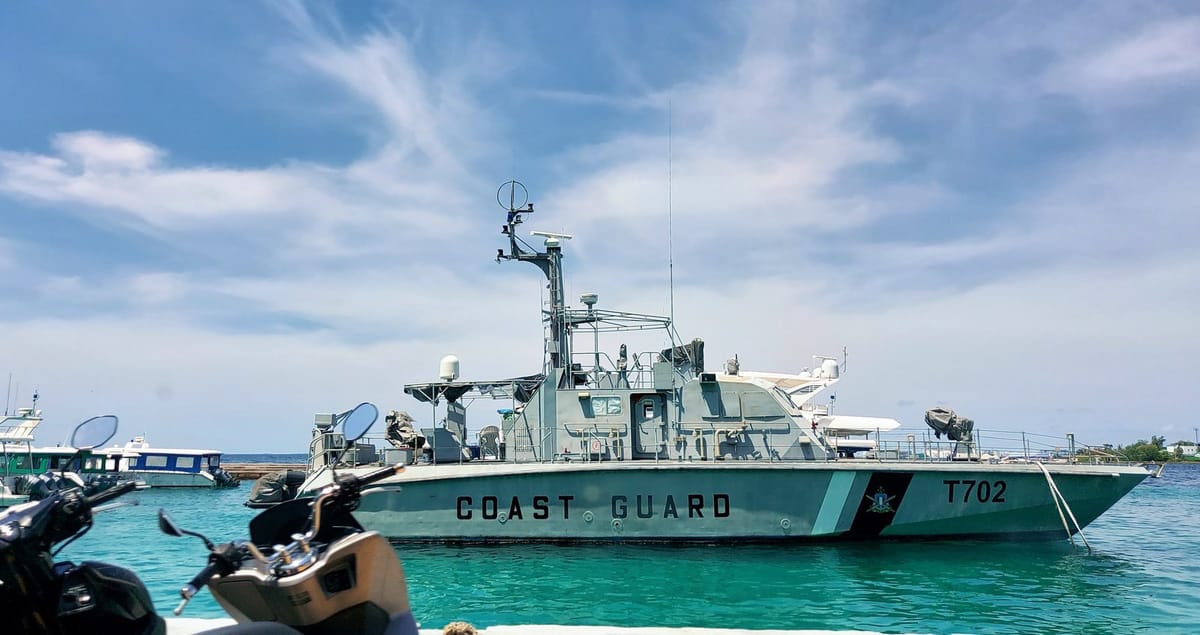
The Maldives National Defence Force (MNDF) has a Coast Guard and a Fire and Rescue Service among its services, according to the MNDF website. Its operations include security and emergency and safety work. The website does not publish a visitor safety guide, so for sea conditions ask your resort, guesthouse or boat operator on the day. For snorkelling and diving rules, see our diving and snorkelling guide.
Diving safety
The FCDO says many resort islands are more than an hour from the nearest hyperbaric chamber, and that the Maldives has three of them. It advises understanding how your dive operator would get you to a chamber before you dive, and notes that accidents can occur on diving safaris and may, in rare cases, be fatal.
Weather and flooding
Visit Maldives says the northeast monsoon from November to April is generally sunny and the southwest monsoon from May to October brings rain. The FCDO notes that flash flooding can affect low-lying islands during heavy rain and tells visitors to follow the advice of local authorities. The Maldives Meteorological Service is the national weather service. See our weather guide for seasons.
Health and medical care
The FCDO says the only fully equipped hospitals are in Malé and Hulhumalé, and that many resort islands are several hours from emergency treatment, though most have a doctor or a clinic. Visit Maldives names Indira Gandhi Memorial Hospital (IGMH) as the main public hospital, with the private ADK and Treetop hospitals, all in Malé, and says each atoll has at least one hospital and most resorts have in-house doctors. Dial 102 for an ambulance. The UK advice lists dengue and measles among the health risks. A yellow fever vaccination certificate is required if you arrive from, or have recently travelled through, a country with a risk of yellow fever transmission, according to Maldives Immigration. Insurance should cover medical evacuation.
Laws and rules that matter for visitors
Some legal risks are specific to the Maldives, and the FCDO lists them clearly:
- Drugs. The authorities have a zero-tolerance policy. Even small amounts of cannabis can lead to arrest, and penalties can be severe. Airports scan carry-on and checked baggage, including for transit passengers.
- Alcohol. It is only available on resort islands. You can be arrested and deported for possessing or drinking alcohol, or being intoxicated, outside resorts and on inhabited islands. Visit Maldives says individuals may not import alcohol, and the airport says liquor bought on the way is confiscated.
- Religion. The Maldives is an Islamic country and it is illegal to publicly observe another religion. During Ramadan, do not eat, drink or smoke in public in the daytime outside holiday resorts. The FCDO says Ramadan may begin on 7 February 2027.
- Dress. Dress modestly outside resorts, including on beaches used by locals. The FCDO says nudism and topless sunbathing are not allowed anywhere, including resorts.
- Same-sex relations. The FCDO says same-sex relations are illegal and conviction can bring a fine or a lengthy prison sentence.
- Souvenirs. It is illegal to take tortoiseshell items or pieces of coral out of the country.
Read our visa and entry requirements guide for customs and entry rules, and our local islands guide for dress and alcohol on inhabited islands.
Is the Maldives safe for solo travellers, women and families?
The FCDO points readers to its general advice for women travellers, solo travellers, disabled travellers and LGBT+ travellers. It does not give a separate Maldives warning for women or families beyond the dress, crime and sea guidance above. Choose a guesthouse with good reviews and a registered operator, keep to supervised swimming areas, and avoid empty streets at night in Malé and Hulhumalé.
Frequently asked questions
Is the Maldives safe?
The UK government says crime is low on resort islands but warns of gang-related violence in Malé and Hulhumalé, and of a risk from terrorism. It lists sea currents and boat propellers as the main hazards for visitors.
Is it safe to travel to the Maldives right now?
The UK advice was still current on 20 November 2026 and carries a notice about Middle East flight disruption affecting connections. Check your airline and your own government's advice before travel.
Is Malé safe for tourists?
The FCDO says there are incidents of gang-related violence including knife crime, mainly in Malé and Hulhumalé, and advises avoiding empty roads on foot after dark.
Is it safe to swim in the Maldives?
Only in supervised or designated areas. The FCDO warns of strong tidal currents and advises following warning flags and local advice.
What is the emergency number in the Maldives?
The Maldives Police Service website lists 911 for emergencies and 332 2111 for non-emergencies. The UK FCDO lists police 119, ambulance 102 and fire 118. The two sources differ, so confirm locally on arrival.
Is it safe to drink alcohol in the Maldives?
Alcohol is available only on resort islands. The FCDO says drinking or possessing it outside resorts can lead to arrest and deportation.
Are there sharks or other dangerous wildlife?
The FCDO's concerns about wildlife are about diving accidents and boat propellers near whale shark sites, not about attacks. We found no official shark-risk statement, so follow your dive operator's briefing.