
Maldives Diving and Snorkelling: Atolls, Manta Rays, Whale Sharks and Rules
A sourced guide to scuba diving and snorkelling in the Maldives, covering manta and whale shark areas, Hanifaru Bay and South Ari Marine Protected Area rules, government safety regulations and seasons.
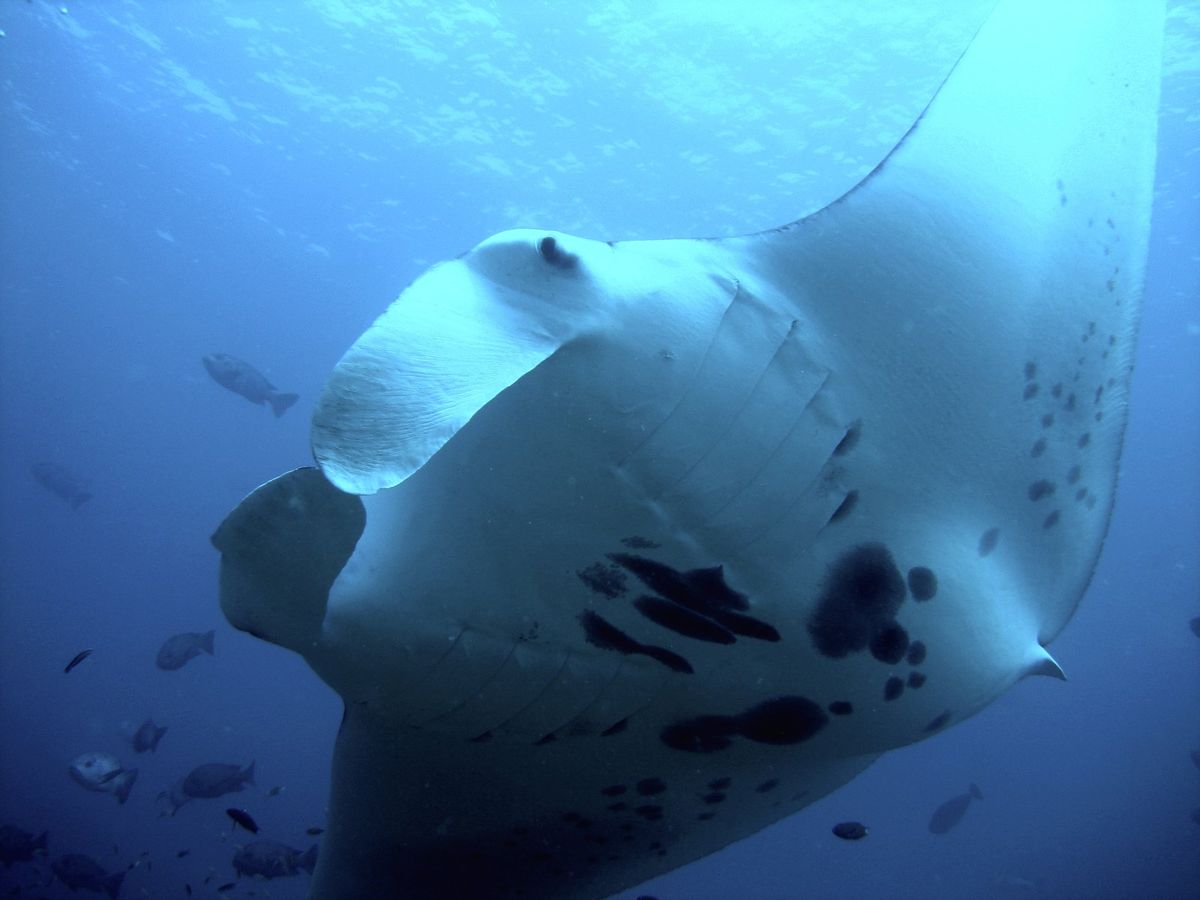
Diving in the Maldives centres on the atolls' channels, pinnacles (thilas), reefs and wrecks, and on seasonal manta ray and whale shark encounters. Visit Maldives, the national tourism board, counts 26 natural atolls, and the best-known marine-life areas are Baa Atoll (Hanifaru Bay), South Ari Atoll and Addu Atoll. Readers also search this as "Malediven" or "Maldivas" diving, "scuba maldives" or "scuba diving in Maldives". This guide covers where animals are seen by season, the protected areas with visitor rules, the safety rules that apply to water sports at tourist establishments, and how diving differs between liveaboards, resorts and local islands. It names no dive centres.
Scuba diving in the Maldives: atolls and dive sites
Visit Maldives, in its divers' guide, describes dive sites in Baa Atoll as ranging "from open-water pinnacles to easy beach dives". It names these examples:
- Dhonfanu Thila in Baa Atoll, a pinnacle dropping to around 30 metres.
- Muhdhoo House Reef, described as an easy beach dive along a coral wall.
- Kudarah Thila in South Ari Atoll, with two large overhangs covered in sea fan corals.
- The British Loyalty in Addu Atoll, a 140-metre former oil tanker built in 1928 that survived a wartime torpedo attack and was scuttled in 1946. It rests on its side at depths of 16 to 33 metres.
The same page says some pinnacles run with strong currents and suit experienced divers better. For atoll names, the government's protected area register uses administrative names such as Alifu Alifu, Baa and Seenu, and files the British Loyalty wreck and the Addu Nature Park under Seenu.
Manta rays in the Maldives
Manta sightings depend on monsoon and side of the atoll. Visit Maldives' manta ray guide gives these windows:
- North Malé Atoll: divers can see mantas at Lankan Manta Point from May to November. Snorkellers can visit Rasfari North from December to April.
- Raa Atoll: mantas are present year-round, with the west (Sola Corner, Maamunagau Falhu) best from December to April and the east best from May to November.
- South Ari Atoll: Mahibadhoo Manta Point (east) from June to November and Rangali Madivaru Manta Point (west) from January to May.
- Baa Atoll: Hanifaru Bay sightings are strongest from May to December, during the southwest monsoon.
Another Visit Maldives page, For Lovers of Marine Life, says mantas can be found during the northeast monsoon from around October to May. The pages give slightly different ranges, so treat the edges as approximate.
Whale sharks and South Ari Atoll
Visit Maldives describes whale shark sightings in South Ari Atoll as "excellent all year round", with a peak from August to November. The official South Ari Marine Protected Area (SAMPA) page also says whale sharks can be seen throughout the year. Visit Maldives names Dhigurah as one of the best places for a snorkelling or diving trip with whale sharks. Visit Maldives lists Dhigurah, Dhidhdhoo, Maamigili and Dhangethi in South Ari Atoll, and Dharavandhoo, Dhonfanu, Maalhos and Eydhafushi in Baa Atoll, as local islands close to whale shark and manta areas.
Hanifaru Bay: Baa Atoll UNESCO Biosphere Reserve
Baa Atoll was nominated as a UNESCO Biosphere Reserve in 2011. The reserve covers 144,024 hectares, including 142,984 hectares of sea, and comprises 75 islands, 13 of them inhabited. UNESCO lists manta rays and whale sharks among its reef animals.
Hanifaru is a marine protected area inside it. The Ministry's protected area page gives a protection date of 5 June 2011 and an area of 529 hectares. It describes a water circulation system that "creates a massive feeding and mating hub during the western monsoon". Visits are booked through the protected area website, where the listed fee for resort visitors is MVR 310 per person (as of November 2026).
Visit Maldives says scuba diving is no longer permitted at Hanifaru Bay, but swimming and snorkelling are. It gives June to early October as the best time to visit. The Ministry page lists two zones, Hanifaru Bay Area and Hanifaru Island, but does not state visitor limits, vessel numbers or time limits. Ask your operator for the current rules and check the protected area website before you go.
Protected areas for diving in the Maldives
The Ministry of Climate Change, Environment and Energy runs the Maldives Protected Areas register, which lists more than 90 areas. Entries relevant to divers include Orimas Thila and Rasdhoo Madivaru (Alifu Alifu), Dharavandhoo Thila (Baa), Fushikandu (Dhaalu), Filitheyo Kandu (Faafu), Emboodhoo Kanduolhi (Kaafu) and the British Loyalty shipwreck (Seenu).
SAMPA was protected on 5 June 2009 and covers 5,610.58 hectares, according to the SAMPA page. It lists these rules for the area: no anchoring, no dumping of trash, no removing rocks, sand, corals or coral rubble, no feeding any species of birds or marine life, no touching or abusing protected species, no lighting up the area at night, and no disruption to natural behaviour through noise. Snorkelling and diving are booked in 30-minute slots through the site and are listed at MVR 0 per person, though the page says fees depend on visitor type. The SAMPA hotline is 7448300 (all as of November 2026).
Maldives diving rules and regulations
The Ministry of Tourism lists a Diving Regulation and its first amendment (2013/R-172) on its regulations page, along with a scuba cylinder hydrostatic testing guideline. We do not quote their detail here. Ask a licensed dive operator which depth limit and certification apply to you.
The Ministry's English-language Regulation 2020/R-27 on safety and security standards at tourist establishments (an unofficial translation) defines water sports to include snorkelling, swimming and diving. It requires tourist establishments to ensure that:
- staff are trained in safety and emergency response, and every instructor holds a recognised Basic First Aid and Rescue Certification;
- safety briefings are given before activities;
- operators adapt to the day's weather and forecast, and give guests weather updates;
- non-swimmers wear life jackets in water sports other than diving, and wear a buoyancy control device (BCD) when diving;
- information about participating guests is recorded, and each property has an emergency response plan for its water sports centre.
Liveaboards, resort dive centres and local islands
Visit Maldives says liveaboards take divers further afield, travelling between atolls, while resort-based diving lets guests reach nearby reefs on boat trips. Local islands are described as a budget-friendly base for whale shark and manta trips, with Dhigurah in South Ari Atoll and Dharavandhoo near Hanifaru Bay among the examples. See our local islands guide.
House reefs and snorkelling in the Maldives
Many resorts sit on or beside a reef. Visit Maldives describes Meeru's Turtle Reef in North Malé Atoll as one of the best places to spot turtles, and says Muhdhoo House Reef offers an easy beach dive. It also advises bringing snorkel gear to local islands near Hanifaru Bay.
Snorkelling safety
The Manta Trust steps published by Visit Maldives say to enter the water quietly, no closer than 10 metres from a manta ray, to keep fins below the surface, to stay at least 3 metres away, not to chase and not to touch. Follow any extra rules at the site. Join a briefing, check the weather update your resort or guesthouse must give, and wear a life jacket if you are not a confident swimmer.
Best time for diving and snorkelling in the Maldives
The monsoon decides where the animals are, not if you can dive. For the month-by-month weather, see our Maldives weather guide. In short, Visit Maldives describes mantas on the west of several atolls in the northeast monsoon and on the east in the southwest monsoon, and Hanifaru Bay as strongest from May to December. Whale sharks are present in South Ari all year. For general planning see the Maldives travel guide.
Frequently asked questions
Where is the best scuba diving in the Maldives?
Visit Maldives highlights Baa Atoll, South Ari Atoll and Addu Atoll. Which is best depends on what you want to see and the month.
Can you scuba dive at Hanifaru Bay?
Visit Maldives says scuba diving is no longer permitted at Hanifaru Bay. Swimming and snorkelling are allowed, with a booking through the protected area website.
When can you see manta rays in the Maldives?
It depends on the atoll. Hanifaru Bay is strongest from May to December, while South Ari's western Rangali Madivaru Manta Point is best from January to May.
Where can you swim with whale sharks?
South Ari Atoll, where the protected area page says they can be seen all year. Baa Atoll is the other area highlighted by Visit Maldives.
Is snorkelling in the Maldives safe?
Under Regulation 2020/R-27, tourist establishments must give safety briefings and weather updates, and non-swimmers must wear life jackets in water sports other than diving. Keep at least 3 metres from mantas and do not touch them.
Do you need to be certified to dive?
Instructors at tourist establishments must hold first aid and rescue certification under Regulation 2020/R-27. Ask the dive centre which certification and depth limits apply to you.
Should I choose a liveaboard or a resort for diving?
Visit Maldives describes liveaboards as travelling between atolls and resort diving as boat trips to nearby reefs.