
Maldives Currency: Rufiyaa (MVR), US Dollars, Cards and Taxes
The currency of the Maldives is the Maldivian rufiyaa (MVR). A guide to US dollars, cards, ATMs, the MMA reference rate, the 17% TGST, green tax and airport departure charges.
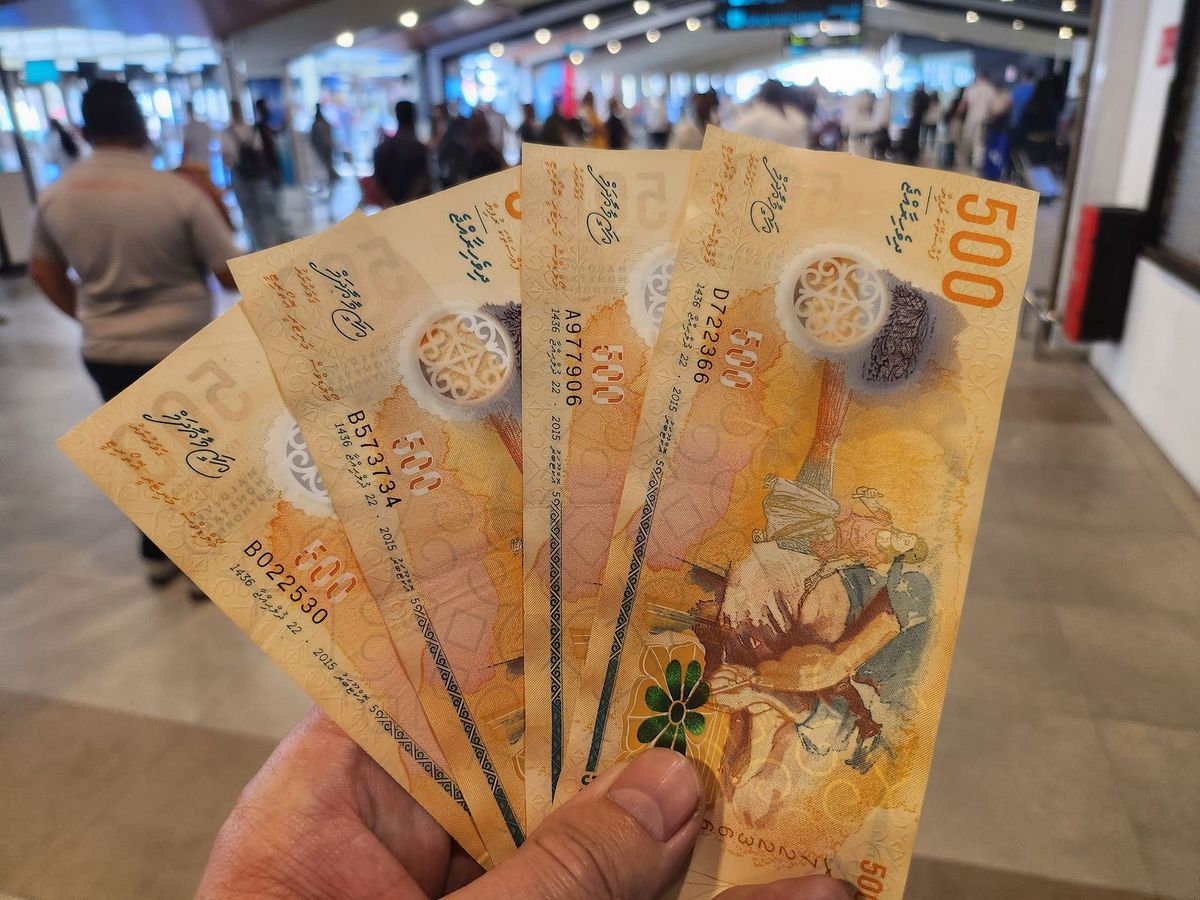
The currency of the Maldives is the Maldivian rufiyaa (MVR), also written rufiya, rufiyah or ruffiya, and often called the Maldivian rupee. Indian searchers sometimes type "Maldeep currency" and German readers simply "Malediven"; the answer is the same. Visitors can also pay in US dollars and by card in most places, which is why many travellers never handle much local cash.
This guide explains what the rufiyaa is, where dollars and cards work, how to check the exchange rate from an official source, and which taxes and charges appear on a visitor's bill. Rates and taxes change, so each figure below is dated and linked to its source. Information is as of November 2026. For the wider picture, see our Maldives travel guide.
What is the currency of the Maldives?
The Maldives Monetary Authority (MMA) is the central bank. On its official website it says it is responsible for printing banknotes, minting coins and keeping an adequate stock of both in circulation. Visit Maldives, the national tourism promotion body, says that "the Maldivian Rufiyaa (MVR) is the local currency" in its travel information page.
The rufiyaa is the local currency used for everyday spending on inhabited islands, such as shops, cafes and local ferries. Dollars and cards are widely accepted in tourist settings (see below), so a short resort stay may involve little or no rufiyaa.
Rufiyaa and laari: notes and coins
The rufiyaa has a smaller unit called the laari. The MMA's currency in circulation page says there are seven denominations of banknotes and eight of coins in circulation.
- Banknotes: Rf 5, 10, 20, 50, 100, 500 and 1,000. The Rf 10 to Rf 1,000 notes of the polymer "Ran Dhihafaheh" series went into circulation on 26 January 2016, and the Rf 5 note in 2017. The MMA announced a new print of the Rf 5 note entering circulation on 14 October 2026.
- Coins: Rf 2 and Rf 1, and laari coins of 50, 25, 10, 5, 2 and 1.
The MMA site also has a "Numismatic Currency" section. These are collector issues, not everyday money.
Can you use US dollars in the Maldives?
Yes, in most tourist settings. Visit Maldives states in its first-timers guide that "US dollars and Euros are accepted in most places" and that card payment is possible.
In practice this means resorts, tour operators and many shops that serve tourists quote or accept dollars. Ask before you pay if the price is shown in only one currency.
Dollar to Maldivian rufiyaa: the official rate
Searches such as "dollar to Maldivian rufiyaa", "Maldives rufiyaa to USD" and "USD to MVR" all ask what the rate is today. The MMA publishes a reference rate on its homepage. On 19 November 2026 it showed USD/MVR 15.42. Treat that as the reference for that day only.
- For later dates, open the MMA website and go to Statistics, then Exchange Rates. The MMA also runs a statistics database with tables and an API.
- Note the date shown beside any rate.
- Compare it with the rate your bank, card issuer or exchange counter offers. Counters and banks may add a margin.
Maldivian rufiyaa to INR
"Maldives currency to INR" and "Maldives rufiyaa to INR" are among the most searched phrases on this topic. We have not seen an official rufiyaa to Indian rupee rate on a government page, so we do not give one. If the MMA lists only dollar rates, convert through the US dollar using the rate your bank or card provider applies, and expect a small difference from any website calculator.
The same method works for euros, pounds and other currencies. Banks and exchange counters set their own margins, so the rate you receive will not match a search-engine figure exactly.
Cards, ATMs and cash
Visit Maldives says that "all major credit cards are accepted in the country" and that "there are card machines and ATMs available in most islands and resorts." It also advises: "it is advisable to carry cash if you are on a local island, just to be on the safe side."
For a resort stay, plan on cards for most spending. For a guesthouse on an inhabited island, bring some cash in dollars or rufiyaa for small shops, cafes and transfers. Tell your bank you are travelling so that card payments are not blocked. The public airport ferry to Malé accepts cash and card, according to Velana International Airport.
Money and customs
Travellers carrying cash of USD 10,000 or more, in any currency, into or out of the Maldives must declare it to Customs, according to a Maldives Customs notice of 10 September 2024 citing Law No. 10/2014. Customs lists "Cash Declaration" as a service on its website.
Customs also says passengers can bring MVR 10,000 worth of personal items, beyond clothes, books and similar items, and tourists aged 18 and over may import 200 cigarettes, 25 cigars or up to 250 grams of tobacco products for personal use (duty free concessions page). For other entry rules, read our visa and entry requirements guide.
Taxes on a visitor's bill: TGST and green tax
Two taxes matter to most tourists. Both are charged by the establishment, not at the airport.
Tourism Goods and Services Tax (TGST)
The Maldives Inland Revenue Authority (MIRA) says that, under the seventh amendment to the Goods and Services Tax Act, the tourism sector GST (TGST) rate "will increase to 17%" from 1 July 2025 (MIRA circular). As of November 2026 we have not found a later change. When a resort quotes a price, ask whether it includes TGST and any service charge.
Green tax
MIRA has issued a circular on green tax rates effective 1 January 2025. Resorts, hotels, tourist vessels, guesthouses and similar establishments charge USD 12 per day of stay. A hotel or guesthouse on an inhabited island with 50 or fewer registered rooms charges USD 6 per day of stay. Children who are not yet 2 years old on the date of check-in are exempt.
Departure charges at the airport
MIRA's airport taxes and fees page lists an Airport Development Fee and a departure tax for passengers leaving through Velana International Airport, paid in US dollars and collected by airlines on scheduled flights. For departures from 1 December 2024 its tables show USD 50 for a foreign passenger in economy class, USD 120 in business class and USD 240 in first class. Maldivian passengers in economy pay USD 12. See the airport guide.
Frequently asked questions
What is the Maldivian rupee called?
The Maldivian rupee is officially the Maldivian rufiyaa, with the code MVR. Many people write it as rufiya, rufiyah or ruffiya, and some call it the rupee. All refer to the same currency.
What is the Maldives currency in Indian rupees?
We do not quote a fixed figure because the rate changes daily and we did not find an official rufiyaa to INR rate. Check the MMA exchange rate page, then compare with your bank. Convert through the US dollar if needed.
What is the dollar to Maldivian rufiyaa rate?
The MMA reference rate on 19 November 2026 was MVR 15.42 per US dollar. Check the MMA homepage for the current figure.
Can I use US dollars in the Maldives?
Yes. Visit Maldives says US dollars and euros are accepted in most places, and cards can be used.
Do I need to exchange money before I go?
Not necessarily. Cards are widely accepted, and ATMs are available on most islands and resorts according to Visit Maldives. Carry some cash if you plan to stay on a local island.
Is there a tax on tourists in the Maldives?
Yes. A 17 per cent TGST applies in the tourism sector from 1 July 2025, and green tax is USD 12 per day at most establishments from 1 January 2025 (USD 6 for small guesthouses and hotels on inhabited islands). Both are charged by your accommodation.
How do I look up the Maldeep or Malediven currency?
These are alternative spellings of the Maldives. The currency is the Maldivian rufiyaa (MVR), and the same MMA sources apply.