Government sends four bills to Maldives Majlis
Four government-proposed bills, on the death penalty, immigration, real estate and protection of name and reputation, had their first reading in the People's Majlis on 9 November.
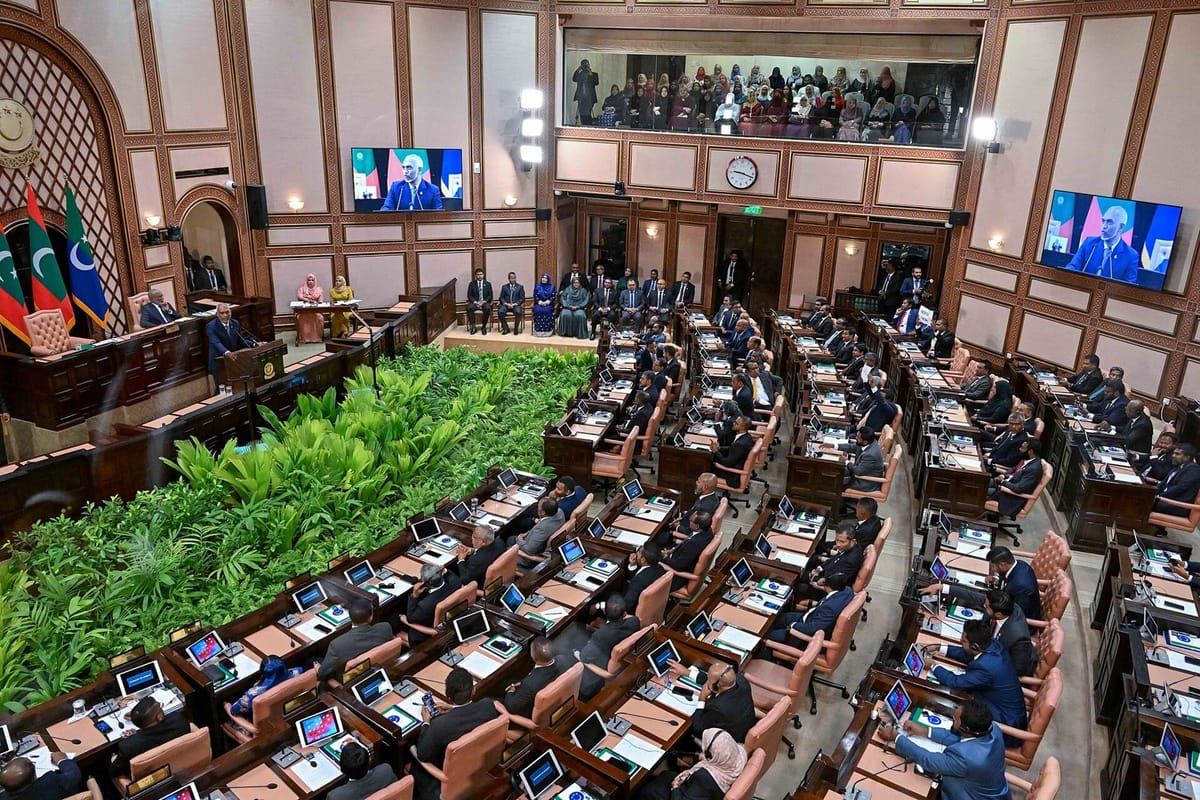
Four bills proposed by the government had their first reading in the People's Majlis on 9 November 2026, according to the Majlis website. They cover enforcement of the death penalty, immigration, real estate development, and protection of name and reputation.
The Majlis lists the bills as read at the 15th sitting of the third session of 2026, held at 2pm. Each is described as proposed by the government and sponsored by an MP.
The four bills
- Death Penalty Enforcement Bill, sponsored by Hanan Mohamed Rasheed, MP for Guraidhoo
- Maldives Immigration Bill, sponsored by Mohamed Dawoodh, MP for North Kulhudhuffushi
- Right to Protection of Name and Reputation Bill, sponsored by Mohamed Ismail, MP for Vilimale'
- Real Estate Development Bill, sponsored by Ahmed Aifan, MP for North Henveyru
What the President said
President Dr Mohamed Muizzu spoke about the bills at a press conference at the President's Office on 9 November, the President's Office said. He said the government's bills are aimed at protecting citizens' rights while safeguarding the nation's independence and sovereignty.
On the death penalty bill, he said government policy is to enforce the penalty in line with the procedures and safeguards set by law, and that the bill provides for this strictly in accordance with due process while protecting the rights of convicted persons. He said not enforcing a sentence imposed by a competent court is not a matter of discretion for a ruler or the head of a Muslim nation.
On immigration, he said the bill provides an unconditional ban on entry for anyone holding an Israeli passport, irrespective of changing circumstances, the President's Office said. Earlier proposals sought to bar entry until Israel halted what he called genocide of the Palestinian people.
Name and reputation bill
The bill document on the Majlis website says the bill is meant to give effect to the constitutional right to protection of name and reputation, while balancing it against freedom of expression. It would treat defamation as a civil wrong, set out circumstances that do not count as defamation, and give an affected person the right to seek a reply or correction and to go to court for compensation.
Where the bills stand
The Majlis pages for the four bills show the first reading as the only stage completed so far. They do not yet show a committee referral or a vote.