Maldives at COP31: Early warning a national priority
President Dr Mohamed Muizzu told the Early Warning for All segment at COP31 that strengthening early warning systems is a national priority for the Maldives. He called for a more ambitious programme beyond 2027 with small island states at its centre.
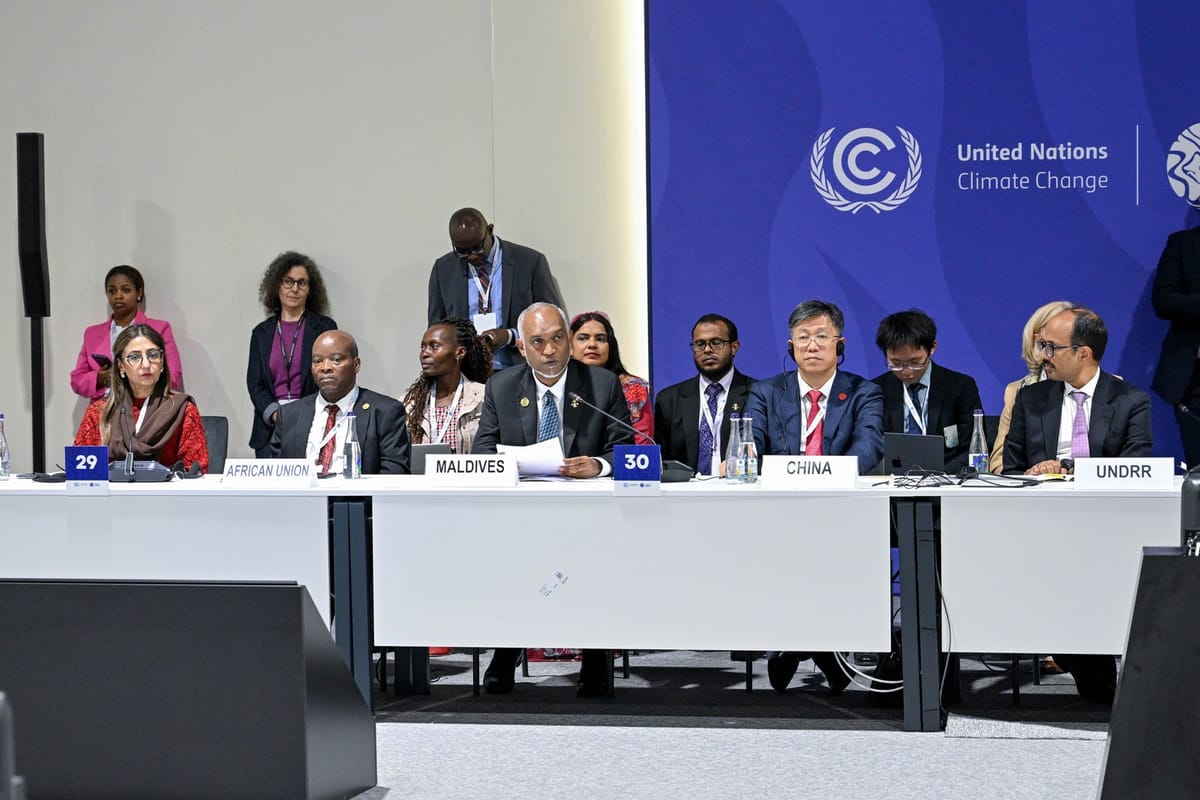
President Dr Mohamed Muizzu has said strengthening early warning systems is a national priority for the Maldives and a critical investment in resilience, preparedness and sustainable development, the President's Office said. He spoke on 11 November 2026 during the "Early Warning for All: Delivering on Our Promise to Protect Everyone" segment at the 31st Conference of the Parties to the UN Framework Convention on Climate Change (COP31).
Why it matters for small islands
The President said early warning systems are essential for a Small Island Developing State such as the Maldives, to protect lives, livelihoods and communities from climate-related disasters. He noted that such threats affect the population, infrastructure and key economic sectors, particularly tourism and fisheries.
He highlighted that the Maldives was the first country in Asia, and among small island developing states, to endorse the initiative. He said significant progress had been made in implementing it, but that progress must now translate into tangible benefits for vulnerable countries.
What he asked for
The President said: "Looking beyond 2027, we call for a more ambitious EW4All programme that places SIDS at the centre of implementation. This includes strengthening weather and climate services, enhancing forecasting capabilities, investing in reliable communication networks, improving community preparedness, and ensuring effective last-mile delivery of warnings."
He called for early warning systems to be built into national climate adaptation and disaster risk reduction strategies. Access to effective systems, he said, should not be regarded as a privilege but as a necessity and a cornerstone of climate justice.
He also called on developed countries, development banks, climate funds and international institutions to give more financial and technical support through grants, concessional financing, technology transfer and capacity-building. The President welcomed ongoing efforts under the initiative and said the Maldives is ready to work closely with all partners.